Inspiration
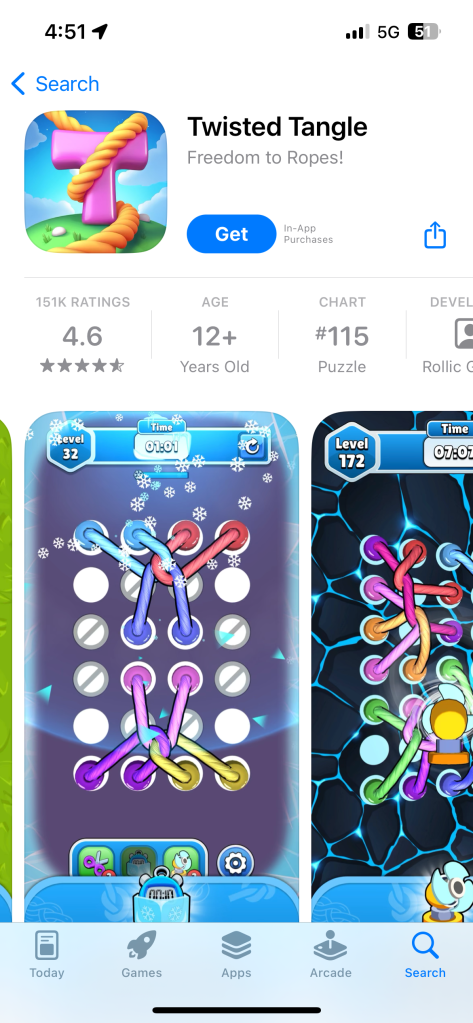
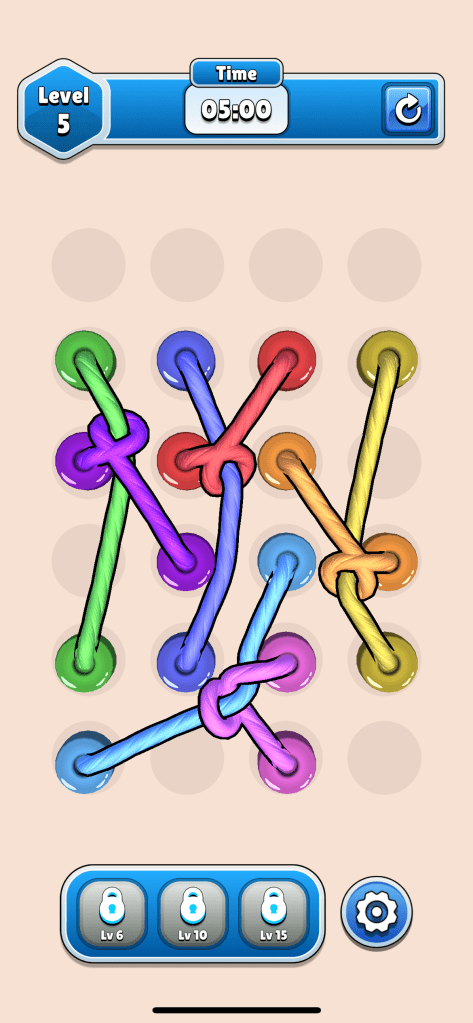
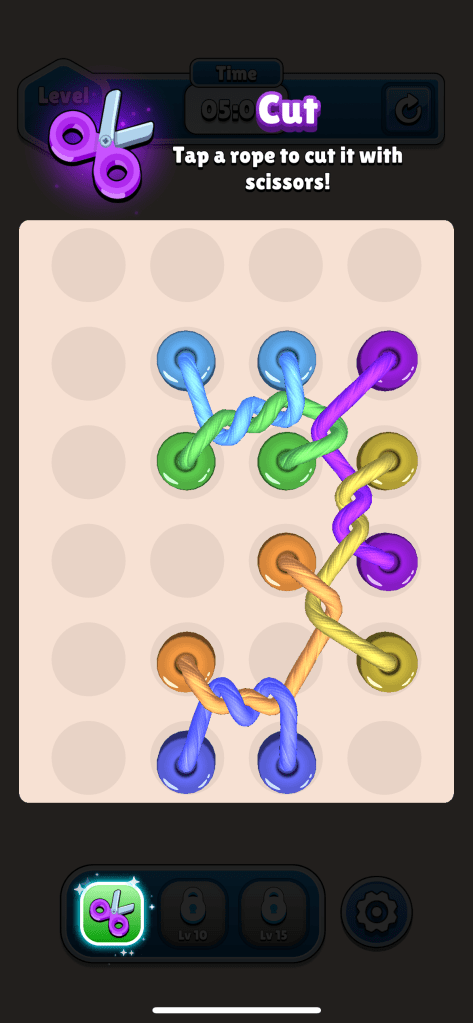
When thinking of what to design, I thought about creating a puzzle. I think from a design standpoint, puzzles are a great way to both exercise your mind and at the same time relieve stress. I often get targeted ads on various forms of social media advertising merge games, matching games, memory games etc. so I began to look more critically at the ads that would appear and was reminded many of the games being created on a digital interfaces were derived from an analog origin, something tangible that engages the tactile sensations. Although the introduction of ‘boosters’, timers, and scoring can be more easily incorporated on a digital medium, something I think is unfortunately common when trying to translate these physical games into a digital format is the loss of tactile sensations. Games that encourage more forms of motion and provide a 3D medium seem to be more interactive in some ways. With the idea of re-establishing tactile sensation when interacting with puzzles, i decided to do something simple-A game that could be played with a single person or a group of people, so I chose ‘Twisted Tangle’ and other games like it as my template.
Planning, Materials, and Building
Originally, I was going to simply make a flat surface using a piece of cardboard and create with little pegs using my remaining cardboard to form my rows and columns. I counted the number of holes on the ‘Twisted Tangle’ app and arranged them in seven columns and six rows.

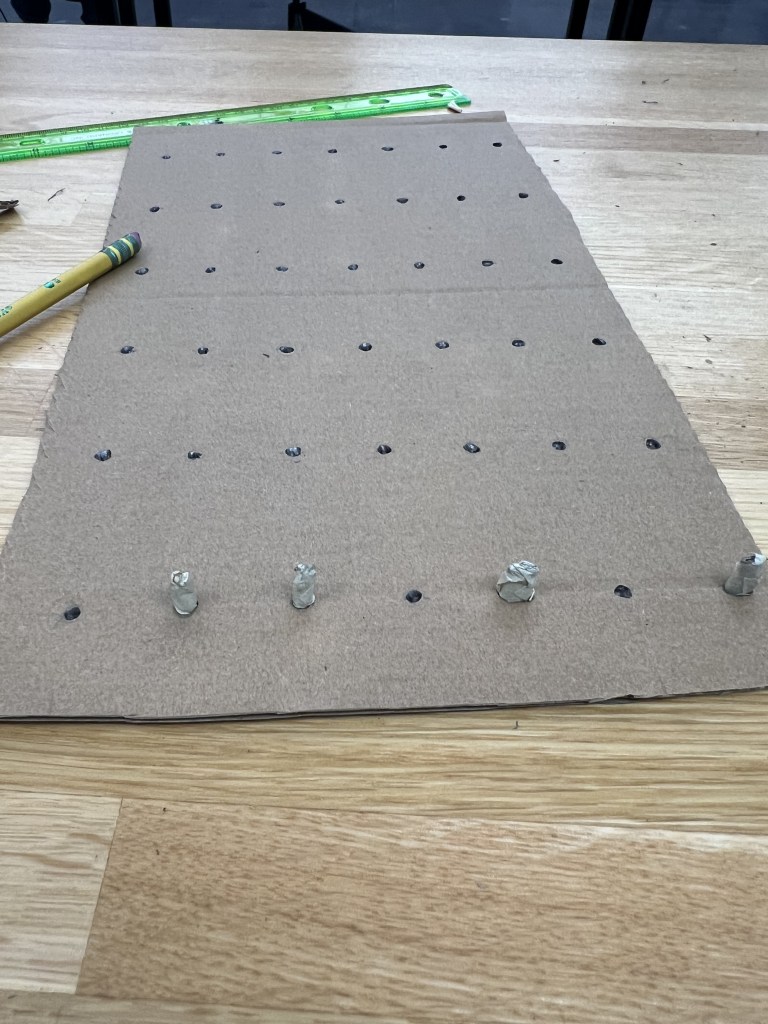
While building, I noticed I was struggling to create the pegs out of cardboard and keep them in place, so I opted for q-tips and hot glue instead. This made my prototyping process exponentially easier.
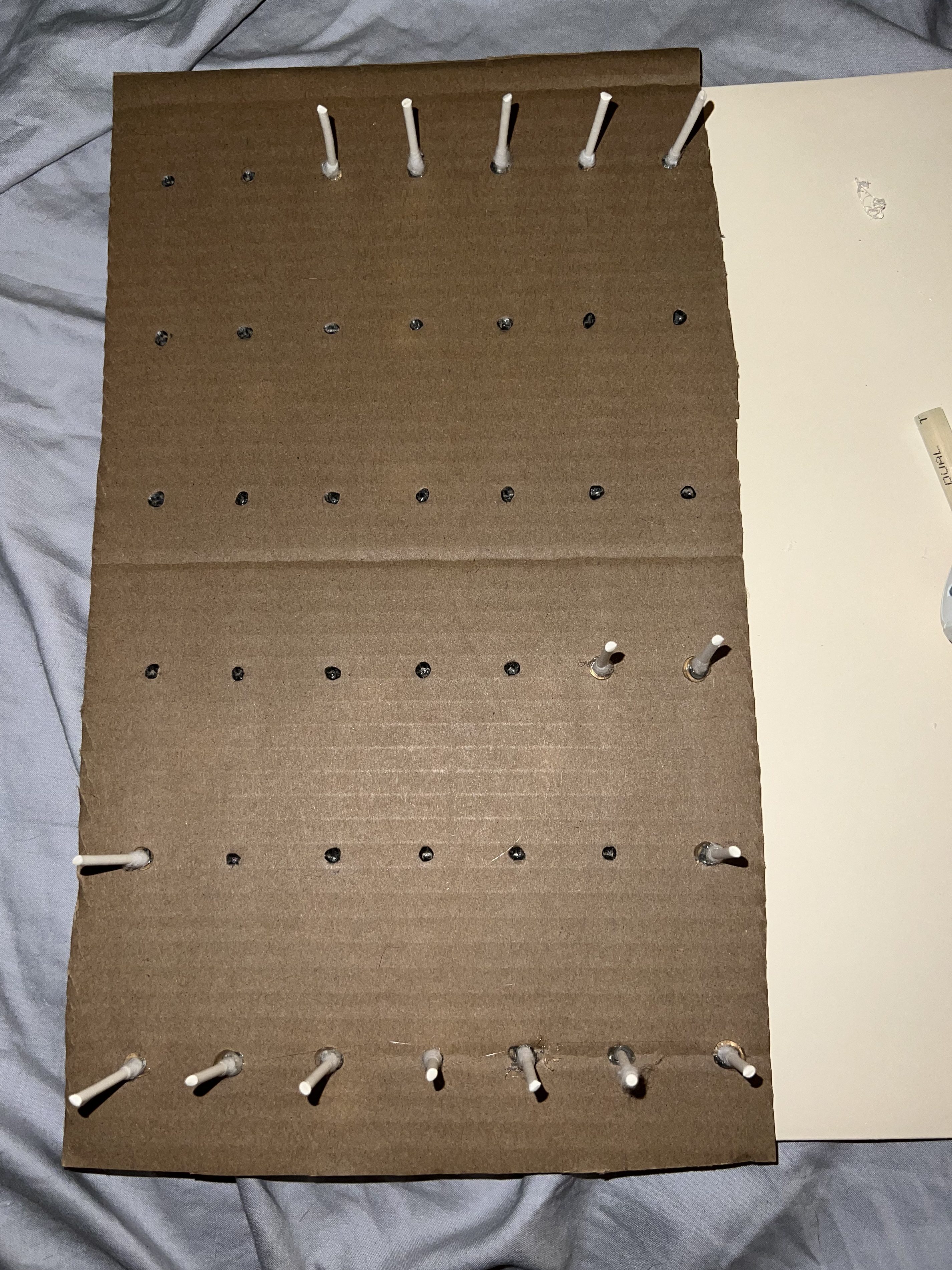
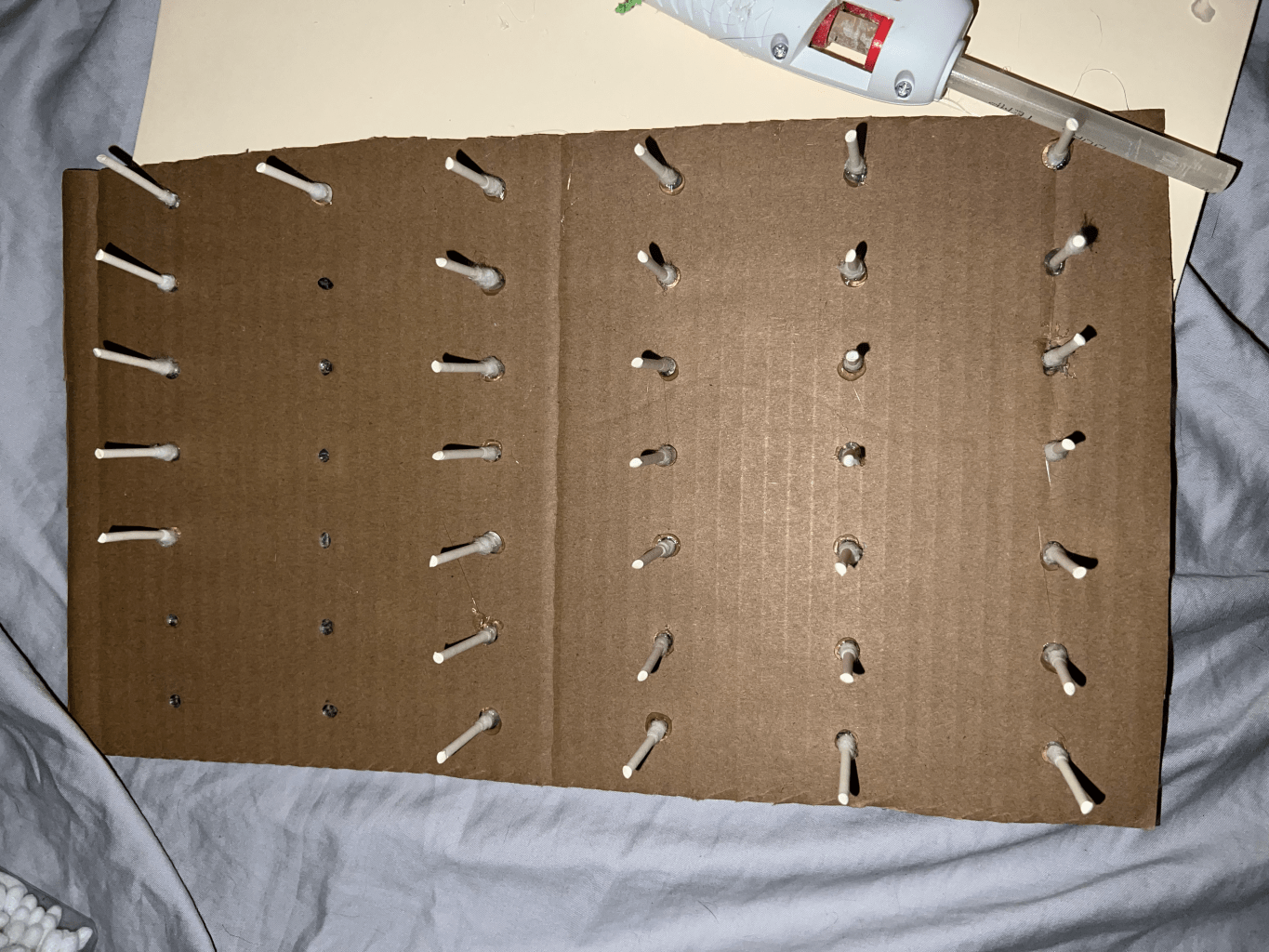
While this prototype on its own could carry out the function and technically fulfilled my goal, something was missing, so I gave it a frame and a stand to make my design more complete and improve the user experience- it would be easier to play the game and it would allow the player to use both hands rather than holding the board with one hand and solving the puzzle with another or having to lean far forward to comfortably view the board.
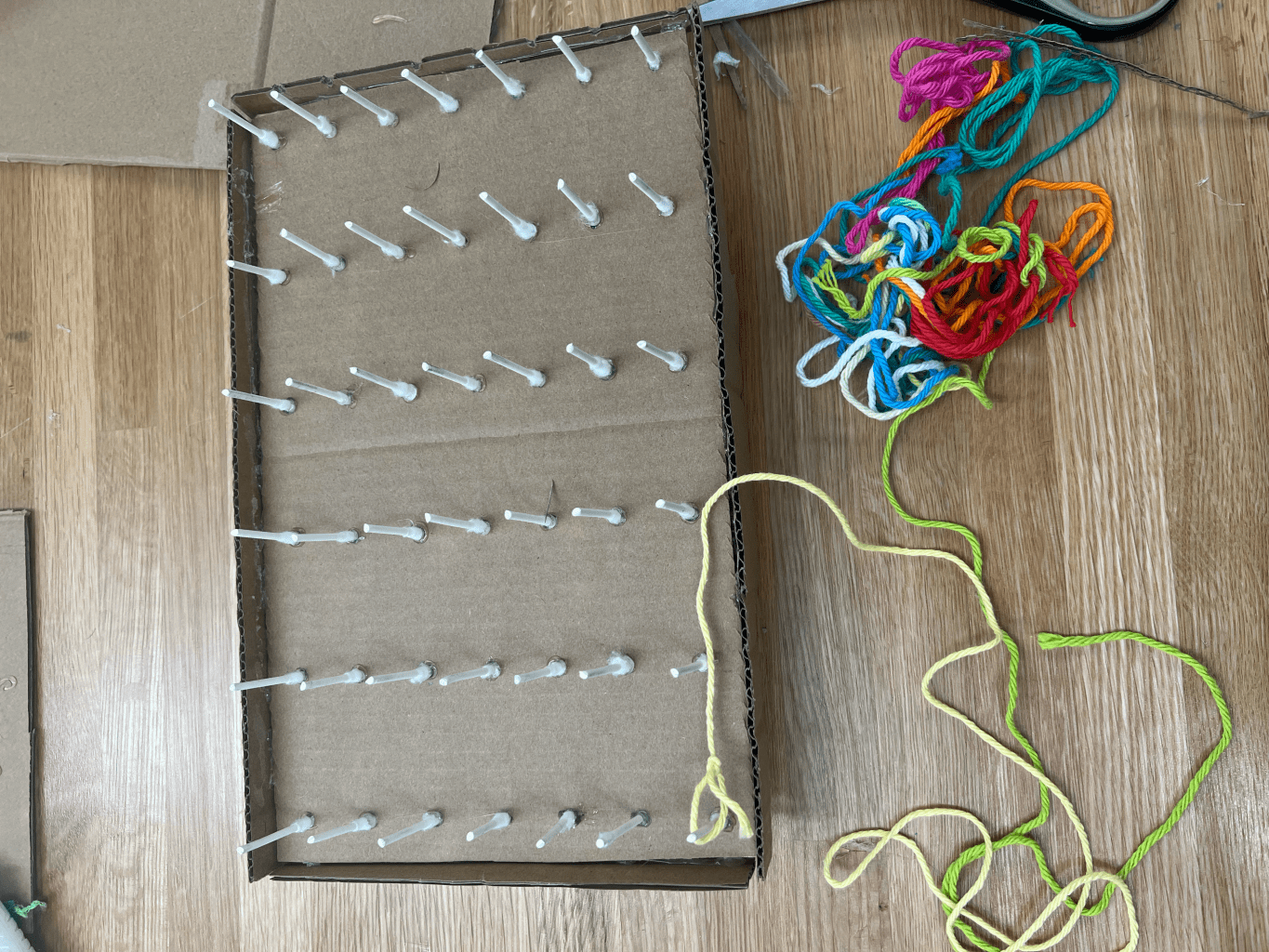
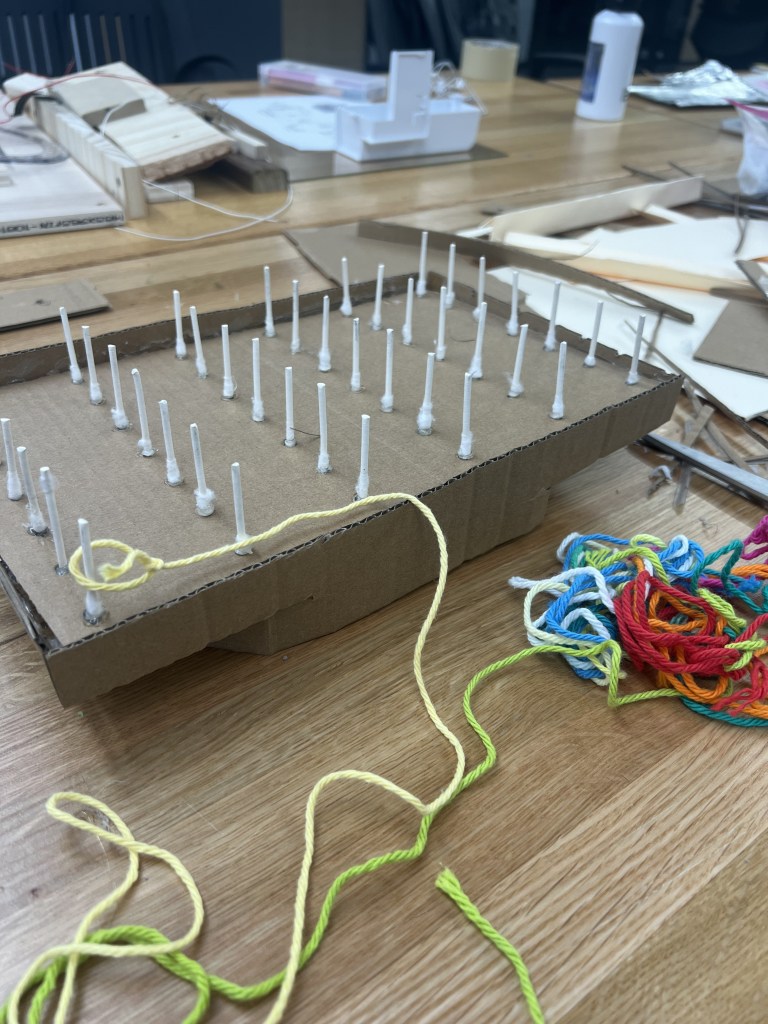
Now that it had a frame and a stand, it was time to be artistic and incorporate color into the prototype through the use of some leftover acrylic paint I had and some yarn from a previous project. I felt that using the resources I had also reflected on how this simple game can be recreated through the use of sustainable resources and at little to no cost at all making it accessible to most everyone.
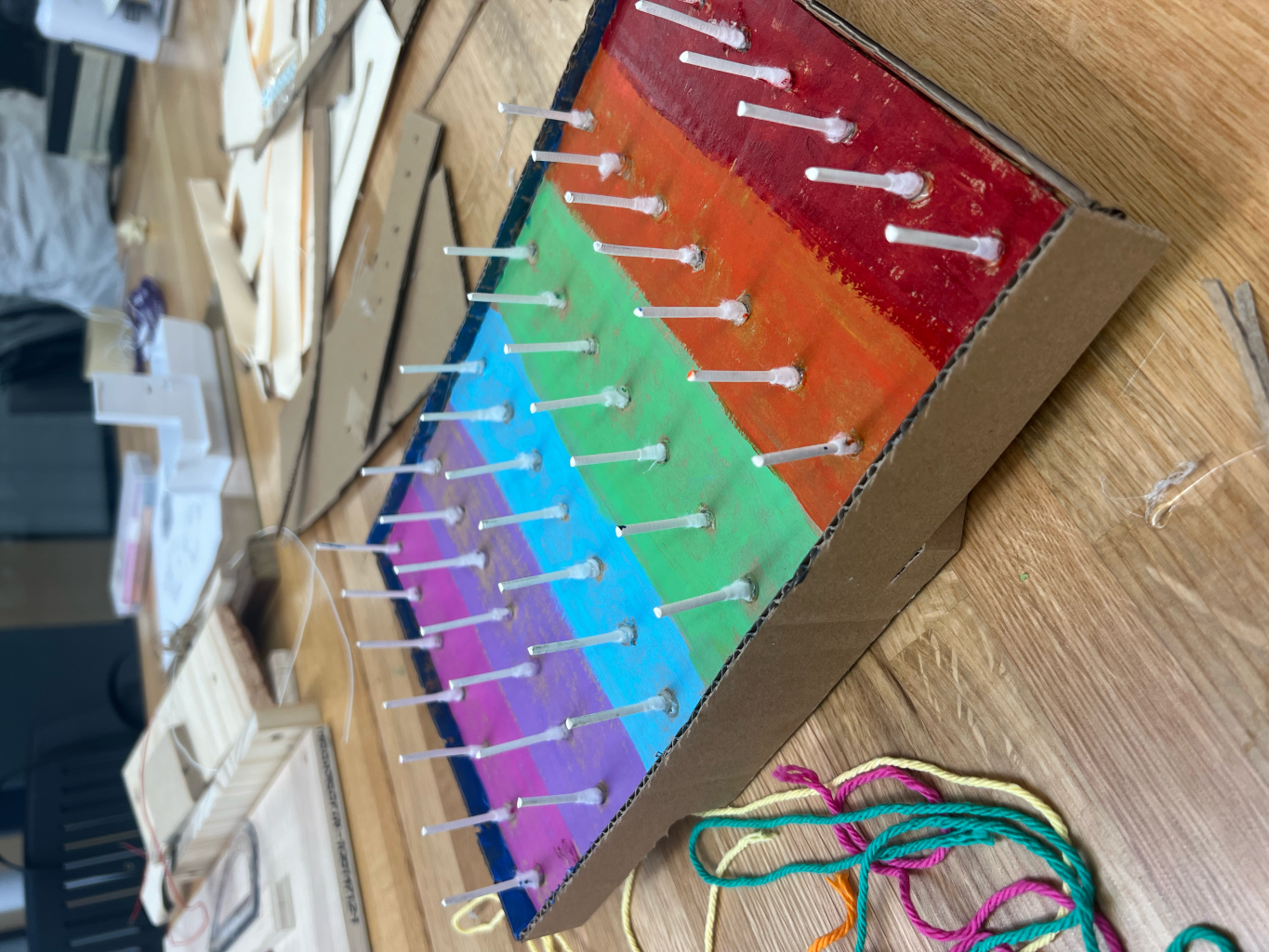
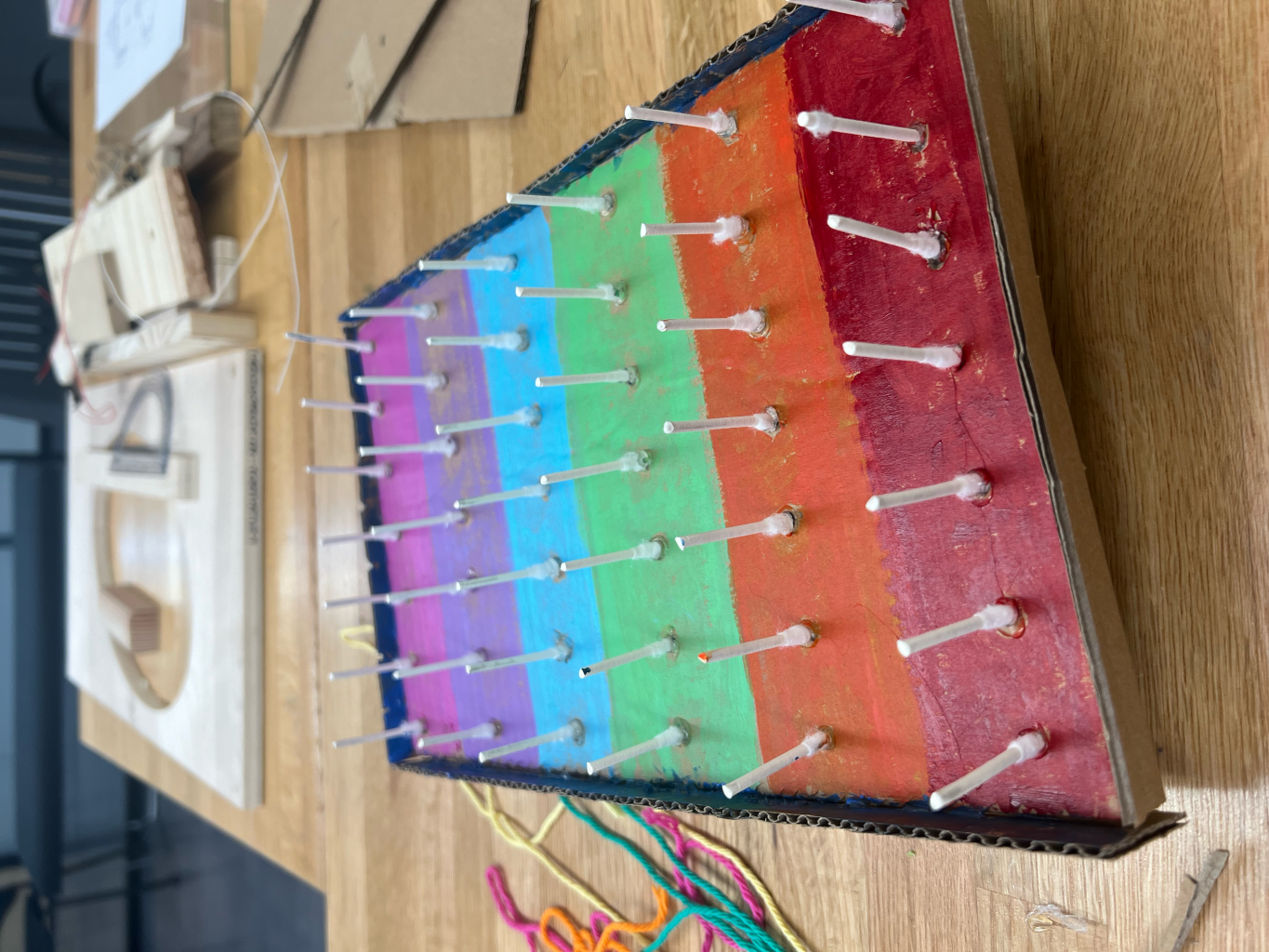
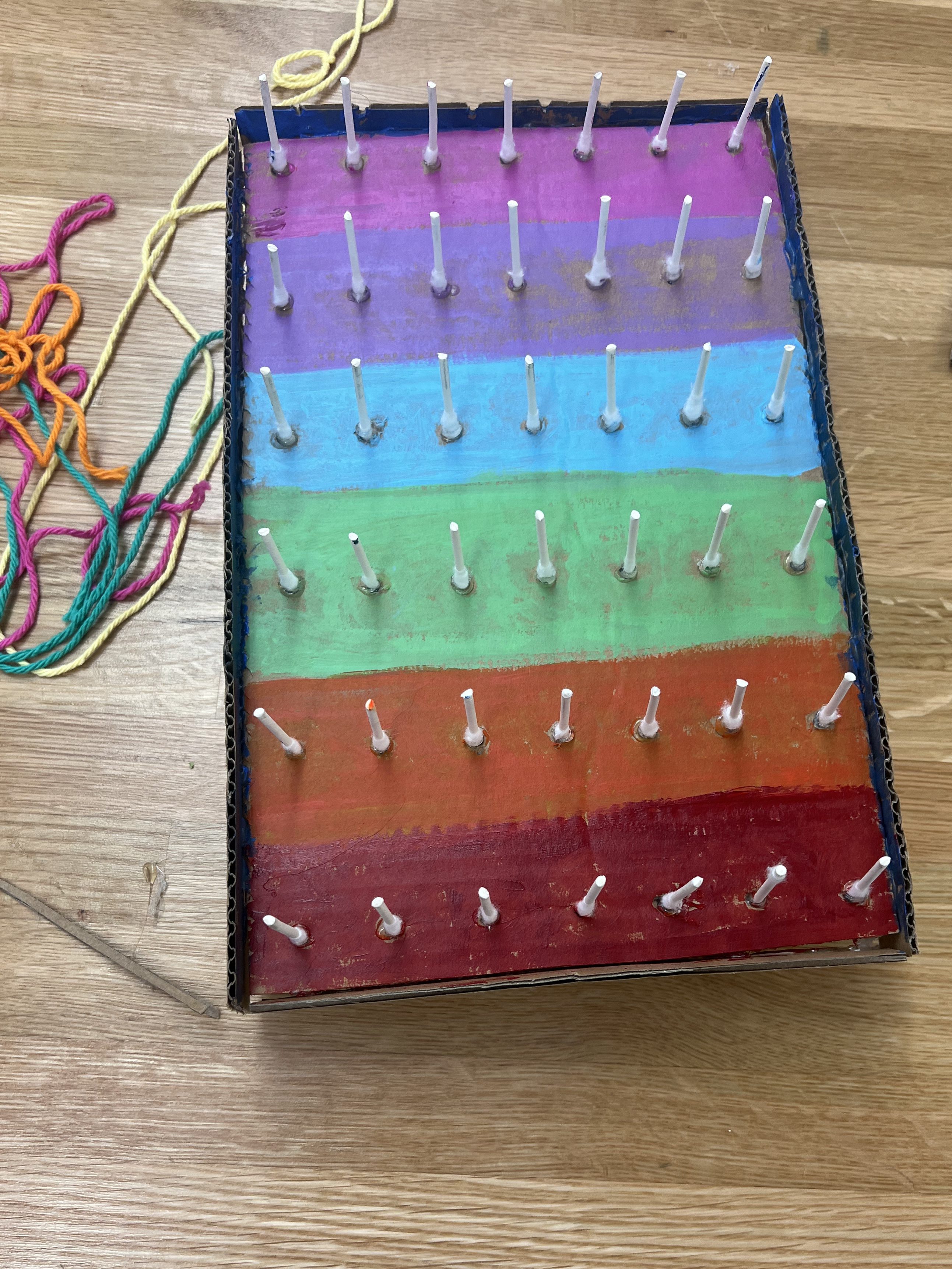
Last thing for me to do was to test out this newly completed prototype! While my prototype isn’t exactly what I envisioned, I am glad I saw areas that needed improvement/adjustments during the process of building rather than after. I’m also happy with fellow onlooker’s responses to this project because it showed me what people prefer in a design as well as encouragement me to move forward with my design. I tested my game multiple times, arranging the layout of yarn in different positions and interweaving them arbitrarily-the format of this game is versatile in the sense that you can arrange the yarn is a plethora of ways as well as showing there are multiple ways to find the solutions.
Concluding Reflection
Although I am very new to prototyping and I find that my projects have been on the craftier or simpler side, the process of designing a game and thinking more critically about how certain aspects of its structure influence how people us it has made me more comfortable with trusting the process and improving my skills for future prototypes. This project as also allowed me to better gauge how to create something both functional and enjoyable in a more efficient and fluid way leaving more room for creativity and less stress or as I often say to myself, ‘analysis-paralysis’.

 Ideation and Prototyping: A Reflection on Creation and Design