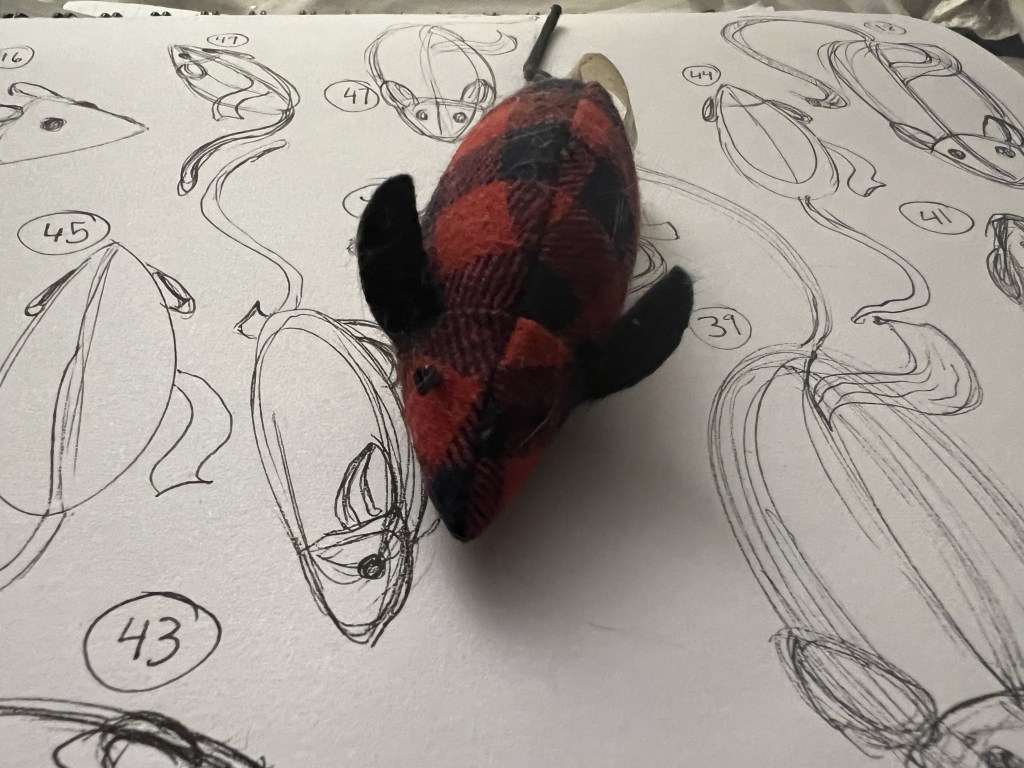
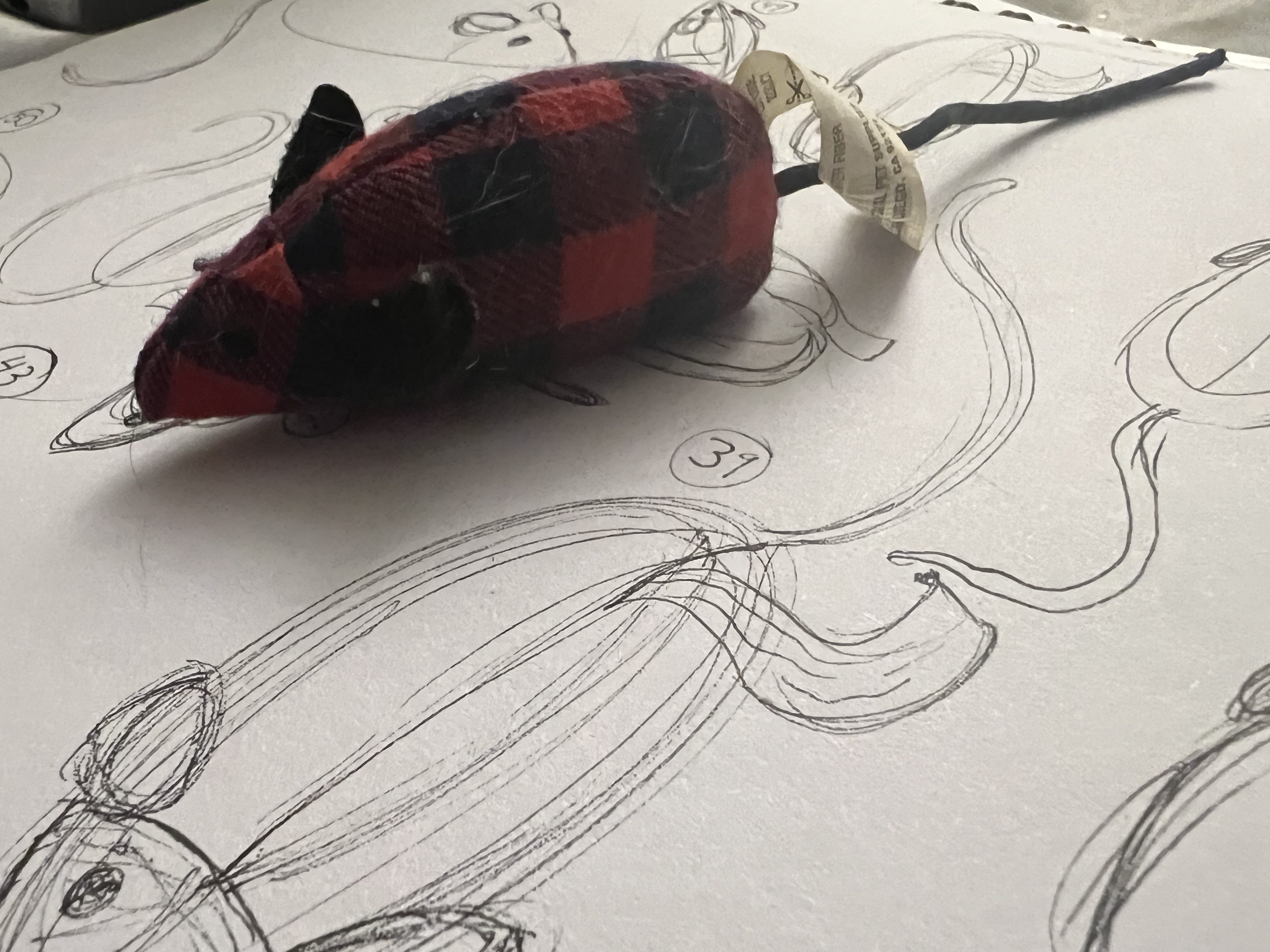
After reading the articles “The Miseducation of the Doodle” by Sunni Brown and “Sketching: the Visual Thinking Power Tool by Mike Rohde,” I reflected on how I initially associated sketching with the idea that it had to be perfect to convey an idea properly. I can fairly say that I am somewhat self-conscious when creating figurative art, especially something based on realism, and I know how important it is to unlearn perfectionism to flesh out ideas and brainstorm. When I initially began to think of what to sketch, I was trying to think of something simple and was concerned that a more complex shape wouldn’t convey the object it was supposed to portray. So I chose a cat toy, a tiny fabric mouse with felt ears, and a black string for the tail. At first, I found myself overthinking how to execute the dimensions, depth, and scale flawlessly, and I struggled to make fluid pen marks or even finish a sketch. I would finish about two sketches before wanting to restart entirely out of frustration. I even considered sketching a different object.

My first round of sketches felt forced, so I turned to the readings for advice and found a section of “Sketching: the Visual Thinking Power Tool” that changed my perspective and motivated me to progress, “The key to generating many ideas is to withhold judgment of them as good or bad until your sketching session is complete” (Rohde, 4). I let myself draw simple shapes rather than focus on minor details. I also became more comfortable sketching over old lines and allowing my sketches to be messy. I found that because I wasn’t paralyzed by overthinking the sketches, I could produce fluid sketches and, in my opinion, better.
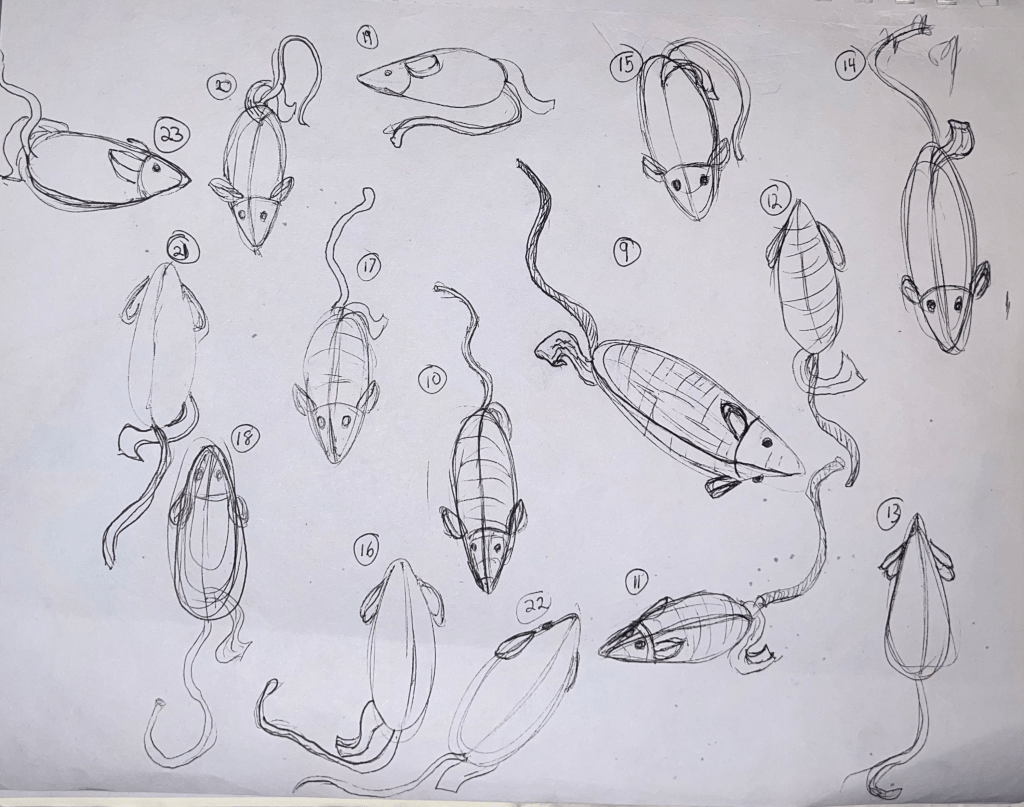
I sketched the mouse from different distances, angles, and positions. I was becoming more familiar with my pen strokes and hand movements while learning what felt most comfortable during the process. I am proud of the difference in quality, and while there were sketches I didn’t like as much, I produced sketches I otherwise wouldn’t have created if I didn’t continue to engage and accept my “mistakes”. The articles also helped ease my stress over whether or not my peers would understand what I was sketching because, at the very least, this was a base idea that should be subject to feedback to improve it and also by being versatile with the way the cat toy was posed I was able to capture better what it truly looked like and its physical properties such as material or texture.

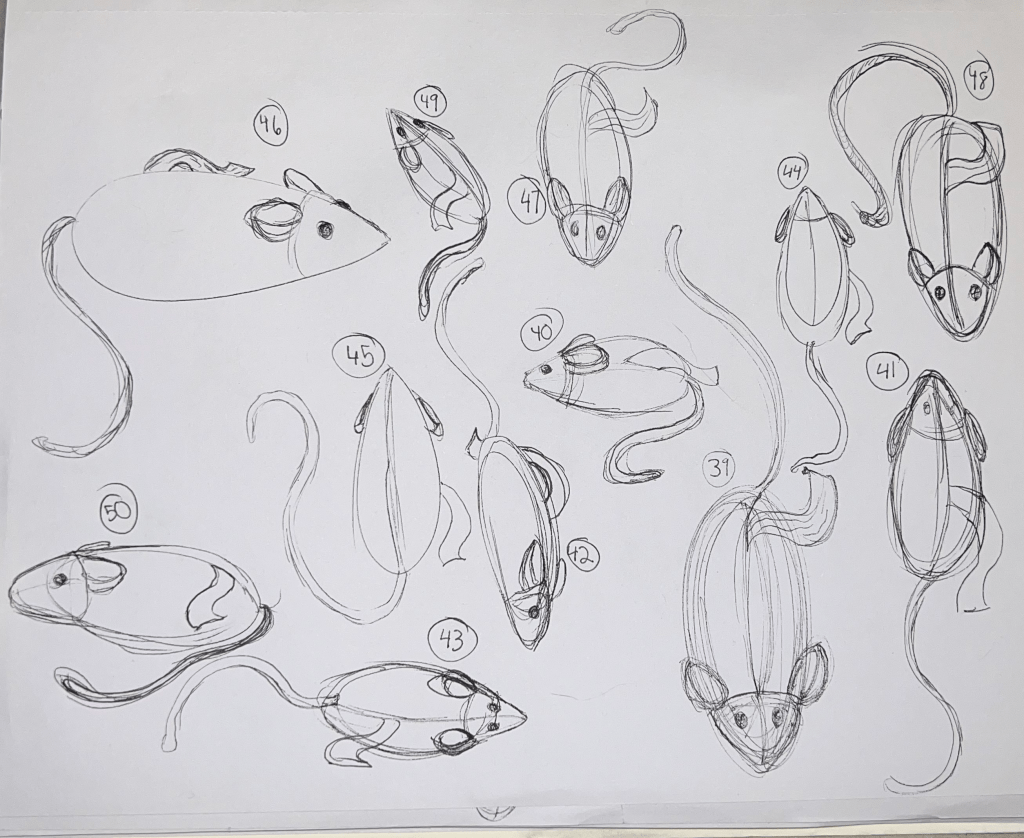
After completing all my sketches, I felt more confident about sketching original ideas and designs. Through experiencing this process, I now see my mistakes as an important means of understanding how to truly bring a design to life.


 Ideation and Prototyping: A Reflection on Creation and Design